Thursday, July 25, 2013

Photos July 19, 20, & 21

Here are some photos from last weekend!

Fea's Petrel July 20 trip (photo George Armistead)
 Fea's Petrel, same individual as above (photo Kyle Kittelberger) 
an intermediate Black-capped Petrel (photo Kate Sutherland)
Kyle taking a photo of the only Great Shearwater we had close to the boat (photo Brian Patteson)
Great Shearwater (photo Kyle Kittelberger)
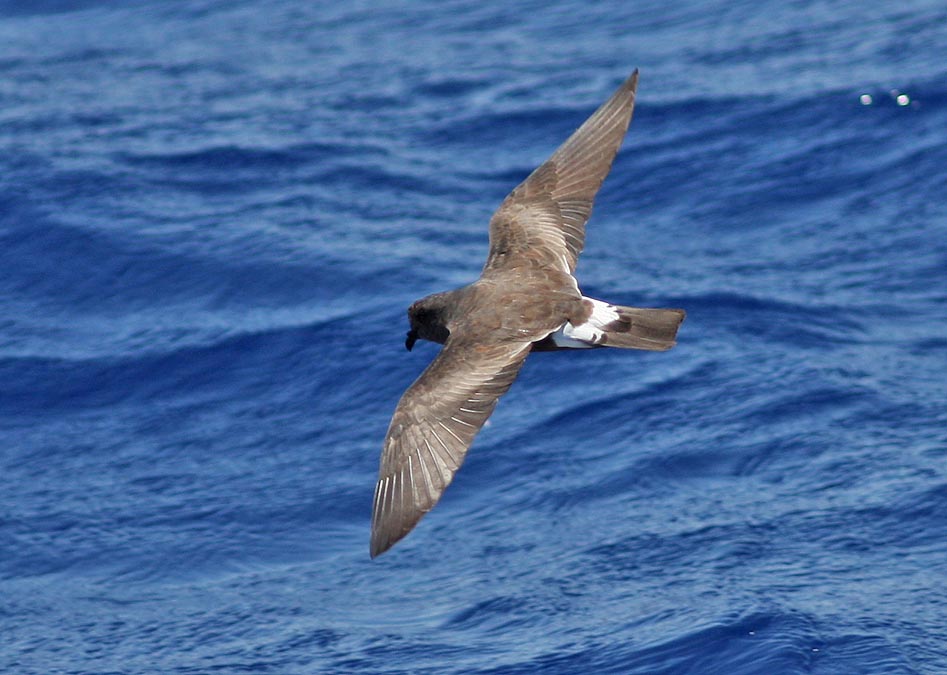
excellent shot of Band-rumped Storm-Petrel from Friday's trip (photo George Armistead)
photo of a Band-rumped Storm-Petrel from Saturday's trip (photo Kate Sutherland)
and just to show how tough the light was on Sunday morning - another Band-rumped Storm-Petrel shot (photo Kate Sutherland)
 Wilson's Storm-Petrels feeding in the slick (photo Kate Sutherland)
 Adult Bridled Tern from Sunday July 21 (photos Kate Sutherland)
& two awesome shots by Kyle Kittelberger from Friday July 19
our Sperm Whale -
 Loggerhead Turtle - not visible: it's attendant school of fish!!
I did take some GoPro video of the Sperm Whale underwater (not the best, but you can tell what it is...), so two clips are posted on our YouTube page - links are here: http://youtu.be/nFSkJ7hrCyohttp://youtu.be/feNOY1NCzT4 

Monday, July 22, 2013

July 19, 20, & 21, 2013

The first three day weekend of the summer went off without a hitch!  We had excellent birding conditions all three days, though the conditions for humans may not have been so perfect if you ask some participants!  Winds were from the southwest all three days, but each day could not have been more different.  Friday was calm and sunny with the winds beginning to pick up a bit in the afternoon, Saturday held the most in terms of wind, and Sunday was still a bit windy, but with heavy rain and thunderstorms to contend with in the morning!  The Gulf Stream was fairly close each day and moving at a good clip, but there was not much Sargassum out there and the most notable this weekend was the absence of shearwaters!  Typically we expect to have no problem seeing large numbers of Cory's and Great Shearwaters in the summer, these were not typical summer trips.

The Fea's Petrel on Saturday morning was the bird of the weekend - this was the first Fea's to be seen in July since 2007; they are more typically seen in the spring or fall.  This bird shot by on the starboard side of the boat and flew down the slick, working around in the distance and then returning for a few close passes so that even naked eye, it was a great look!  Everyone also had great looks at Black-capped Petrels, and our other warm water specialty - the Band-rumped Storm-Petrel - both were hungry and easily recruited to the slick each day.  Wilson's Storm-Petrels were scarce, so there were times when the "default" storm-petrel in the slick was Band-rumped!  It was an interesting exercise to show participants Band-rumped Storm-Petrels without being able to use a Wilson's for comparison!  Amazing how easy it has been to find the Band-rumped Storm-Petrels so far this summer; these trips have far surpassed most others in quality encounters with this sometimes shy species.  Leach's Storm-Petrels were seen on all three trips, but they did not feed as readily in the slick for easy viewing.

Cory's Shearwaters were mostly seen on Friday and though there was a report of one on the way out Saturday morning, we did not see one for the list.  How it is possible to be out from Hatteras in the summer and see a Fea's Petrel, but no Cory's Shearwater, we do not know, but it has now happened at least once!  Great Shearwaters were seen flying by in the distance Friday & Saturday with one on Sunday coming in to the slick and plopping down right next to the boat for the weekend's best looks (and photo ops)!  Audubon's Shearwaters were as scattered as the Sargassum they favor and we had a tough time getting a good, close look at one, but again, on Sunday we finally had some closer views.

Two Bridled Terns were seen, one younger individual that was spotted by Chloe Walker (age 13 of TN) in the slick on Friday and another, more cooperative adult seen on Sunday afternoon.  A Pomarine Jaeger flew by the boat quickly on Friday afternoon and possibly another was seen Sunday afternoon on the way back inshore.

Non-avian highlights were also encountered, though not nearly like our last trips a couple of weeks ago!  We had a very close and cooperative Sperm Whale on Friday that swam right next to the boat for almost 30 minutes!  Later that afternoon we had a large Loggerhead turtle with an attendant school of fish swim right under the boat, surfacing for an excellent photo-op.  That same day we also saw a nice school of Tripletail under a log out in the clear, blue water of the Gulf Stream.

Overall the trips were a great success!  We would like to thank everyone who joined us over the three days.  A big thanks also to our leaders, George Armistead and Kyle Kittelberger (who got us on that Fea's Petrel!) - both were a great help spotting birds and helping our participants.  We have three long weekends in August - two from Hatteras and one from Oregon Inlet - please check our website for prices and availability!

Friday July 19, 2013
Black-capped Petrel  33
Cory's Shearwater  13
Great Shearwater  2
Audubon's Shearwater  6
Wilson's Storm-Petrel  130
Leach's Storm-Petrel  1
Band-rumped Storm-Petrel  28-31*
Bridled Tern  1
Pomarine Jaeger  1

Sperm Whale  1
Loggerhead Turtle  1

Saturday July 20, 2013
Fea's Petrel  1
Black-capped Petrel  23
Great Shearwater  1
Audubon's Shearwater  23
Wilson's Storm-Petrel  45
Leach's Storm-Petrel  2
Band-rumped Storm-Petrel  25-29*

Loggerhead Turtle  1

Sunday July 21, 2013
Black-capped Petrel  25
Cory's Shearwater  2
Great Shearwater  2
Audubon's Shearwater  12
Wilson's Storm-Petrel  101
Leach's Storm-Petrel  3-4
Band-rumped Storm-Petrel  18-20*
Oceanodroma sp.  1
Bridled Tern  1
Black Tern  1

Loggerhead Turtle  2

*Many of the Band-rumpeds were following in the slick for fairly long periods, these are our best estimates!
A few photos from Friday's trip - more to follow later this week!
Band-rumped Storm-Petrel (Kate Sutherland)

 Sperm Whale & participants (Brian Patteson)
 you can see how close it was!  (taken from the wheelhouse by Brian Patteson)
The Swift Ace behind the Sperm Whale (Brian Patteson)

Thursday, July 11, 2013

Photos July 6 & 7

Some photos from this past weekend.  Thanks to Nate Dias for letting us use some of his images from Sunday's trip!

Black-capped Petrel - photo Brian Patteson
Leach's Storm-Petrel - photo Brian Patteson
 Band-rumped Storm-Petrels - photos Kate Sutherland
 Audubon's Shearwater taking off with a Great Shearwater flying behind - photo Kate Sutherland
Saturday's Bridled Tern - photo Kate Sutherland
 Pomarine Jaeger chasing a Black-capped Petrel - photo Brian Patteson
South Polar Skua - photo Brian Patteson
 South Polar Skua over a Cory's Shearwater - photo by Kate Sutherland
 young Sperm Whale from Sunday's trip - photo by Kate Sutherland
a pair of Gervais' Beaked Whales - photo Kate Sutherland
 excellent image of a Gervais' Beaked Whale - photo by Nate Dias
 offshore Bottlenose Dolphins - photo Kate Sutherland
 Nice shot of one of the Skipjack Tuna that shearwaters were feeding over each day - photo by Nate Dias
 & the hopper dredge Murden whose position dictated the timing our return trip in the channel each day! - photo Kate Sutherland

Wednesday, July 10, 2013

July 6 & 7, 2013

Summer is finally here as our trips this past weekend illuminated so well!  We had just enough breeze each day to make us comfortable, but the seas were mostly quite calm.  In recent years our spring trips have become more popular, and in keeping with that theme, we had just enough participation to run these trips - but each day really exceeded our expectations for it is still not fully summer, with the beehives and tropical terns that abound in August, yet the birds, mammals, and yes - fish - were spectacular!

The Gulf Stream current was quite typical on Saturday but by Sunday it had pushed way offshore so we spent the day in the deep well over a 1000 fathoms and finally found signs of life similar to Saturday.  Black-capped Petrels were seen well each day with more individuals on Sunday when it was a little windier.  The shearwaters were out there, with excellent numbers of Cory's and Greats making up most of the feeding flocks we found over small skipjack tuna.  Audubon's Shearwaters were scarce on Saturday and we had a tough time getting a good, close look at one, but Sunday they seemed to be everywhere - on the way to the deep and in the feeding flocks!  Wilson's Storm-Petrel numbers were low overall for the weekend, but the large storm-petrels were quite pleasing on Saturday and definitely not shy on Sunday either!  Leach's Storm-Petrels were a surprise for us on Saturday with their numbers, it was like a "Leach's Highway" out there on our slick!  We had Band-rumped and Leach's Storm-Petrels coming in to the chum and feeding from 0900 until after 1330 on Saturday.  While the Band-rumpeds were not quite as cooperative on Sunday, we still had nice views.  Over the weekend we saw not only the cool season breeders (Grant's Type), but what looked to be some of the smaller individuals as well (possibly Madeiran).  Bridled and Sooty Terns were scarce, as we expected this early in the summer, but Saturday morning the first bird of the day was a Bridled Tern perched on a float!  Sunday we encountered both species over a feeding flock of shearwaters.  The star of the show Saturday was a South Polar Skua that flew in to a flock of feeding shearwaters and petrels before 1300!  This individual spent more time than usual harassing the shearwaters in the flock, sitting down for a moment, then gearing up again and again to chase them!  It was a spectacular show!  Sunday we did see a Pomarine Jaeger in the morning, but it was quite lethargic by comparison.

Cetaceans were definitely around this weekend and the conditions helped us spot them.  Though we had many calm days this spring, beaked whales were not seen very often and this caused some concern, since we spent a lot of time where they typically live.  Just this past weekend we encountered more Gervais' Beaked Whales (Mesoplodon europaeus) than we have seen in recent memory!  Saturday we also found three distant Sperm Whales just inshore of 1000 fathoms.  These individuals stayed on the surface long enough for us to see their distinctive blows well before they dove, showing their tail flukes.  Sunday on the way back inshore, inside of 500 fathoms (about 3,000 feet of water) Brian saw an animal blowing just ahead of the boat.  It turned out to be a young Sperm Whale, the shallowest we've seen one off of Hatteras, and it had just enough curiosity to spend time swimming along and surfacing next to the boat before diving.  We also had excellent looks at both Atlantic Spotted and Bottlenose Dolphins over the course of the weekend.

Thank you to everyone who joined us and thanks also to our leaders - Scott Winton and Kyle Kittelberger - they both did a great job spotting and keeping everyone keyed in to what was going on around us.  Our next trips are July 19, 20, & 21 - the summer continues...

Saturday July 6, 2013

Black-capped Petrel  16
Cory's Shearwater  166-189
Great Shearwater  80-92
Audubon's Shearwater  5
Wilson's Storm-Petrel  76-86
Leach's Storm-Petrel  21-28
Band-rumped Storm-Petrel  19-22
Bridled Tern  1
South Polar Skua  1
jaeger sp.  1

Sperm Whale  3
Gervais' Beaked Whale  7
Bottlenose Dolphin  20

Sunday July 7, 2013

Black-capped Petrel  26
Cory's Shearwater  125
Great Shearwater  92-97
Audubon's Shearwater  24
Wilson's Storm-Petrel  30-40
Band-rumped Storm-Petrel  22-23
Oceanodroma sp.  1
Sooty Tern  1
Bridled Tern  1-2
Pomarine Jaeger  1

Sperm Whale  1
Gervais' Beaked Whale  9-10
Atlantic Spotted Dolphin  11
Bottlenose Dolphin  20-24

Photos to follow tomorrow...!

Saturday, June 29, 2013

Spring 2013: A Recap by Brian Patteson

Another Spring Blitz is behind us, and unlike some years, I've actually had a little time to reflect on it and to think about how it went in comparison to other years.  I have run spring pelagic trips from Hatteras for 20 years now, so there's a bit of history behind the current operation.  It started with just a few trips in late May and early June to look for the "recently discovered" Trindade and Fea's Petrels off Cape Hatteras along with an assortment of other spring migrants which were either absent or occurred erratically on the summer trips, which were the norm back in the '70s and '80s.  The discovery of Bermuda Petrel here in the mid '90s and then European Storm-Petrel just a decade ago, added even more incentive for birders to take these trips and we have met the demand by running a marathon of daily trips on our own boat since 2006.  2013 was the seventh year on our current vessel, the Stormy Petrel II.  We ran 14 "open" birding trips this year from May 18 to June 9 with 11 consecutive trips May 24 to June 3.  In 2009, we ran 19 consecutive trips!  We also ran five private charters for birding June 5 to June 13.  This is the only time of year we run so many trips back to back, so it gives us a unique perspective into the daily changes offshore and the passage of several spring migrants and visitors.  Off Cape Hatteras the marine environment is constantly changing and the impact of the Gulf Stream current is of paramount importance to the seabirding here.  The Gulf Stream can bring new birds in overnight, but it can also take them way out to sea when it takes a queer turn, as happened to us this spring.  We began our season with a hard current (3 to 4 knots) running near the shelf break, but within days the current moved way out (another 30 or 40 miles) and did not return to the shelf break for a few more days.  It wasn't as bad as 2010 when the stream stayed way offshore for weeks, but it made for some tough birding just when it seemed to be getting quite good.  Nevertheless, we scrapped out a good spring.  Looking back, we did better with some species than I might have thought because I tend to remember more highlights than lowlights from past seasons!

Trindade Petrels were up, but still nothing like what we saw here in 2007 when we had some easterlies blow in the motherlode.  We saw at least five this spring, the most we've seen in the last six springs!  Fea's Petrels were only seen on two trips, the worst showing since 2010.  I think we would have seen more if we had more windy days.  This year, we actually had the longest stretch of calm weather I can recall for late May and such is not usually conducive to seeing gadfly petrels.  Black-capped Petrels were seen daily, but in low numbers, again hopefully meaning they were just somewhere else.  Large numbers were seen at the Charleston Bump during this period, so maybe we will get more of them here on our next trips.  After three years without a sighting, we did get a brief look at a Bermuda Petrel this year on June 3.  We saw Cahows annually for over a decade and numbers are increasing, so I'm hopeful we will see some more in the near future, hopefully close to the boat next time!

Over the course of the first 13 trips, May 18 to June 3, we saw over 800 Cory's Shearwaters, which is far more than what we usually see during that period.  Great Shearwaters did not show daily until May 30, which is about normal especially without any swell or easterly wind.  Sooty Shearwaters were scarce, but steady, and we saw them on nearly all of the trips we ran in May.  Manx Shearwaters were hard to come by this spring.  Audubon's Shearwaters were seen in decent numbers but their abundance seems hard to gauge because it is so tied to the sargassum and wind direction.  I know we used to see a lot more of these birds 20 years ago.

Storm-Petrels were a mixed bag.  Overall, we saw modest numbers of Wilson's but only about 350 over a four day period in late May when we would have expected three or four times that number.  Band-rumped Storm-Petrels were seen on nearly all of the trips in slightly above average numbers.  Almost all of these appeared to be molting, winter-breeding birds.  Leach's Storm-Petrel, which is a bird of the easterlies was seen in low to modest numbers this spring and not on as many trips as some years.  For the first time since 2004, we did not see a European Storm-Petrel this year.

We only saw three tropicbirds this spring.  Two Red-billeds on May 22 and a White-tailed on May 28.  Had the Gulf Stream not gone out to sea the last of May, I think we might have seen a few more.

South Polar Skua was hard to find this spring, but this is usually the case in the absence of strong east winds.  We saw just a couple, one of these fairly close to shore.  Pomarine Jaegers were seen on nearly all of the trips, but never in large numbers.  I was surprised we saw as many as we did, given the weather, but maybe this is an artifact of recent breeding success, since most were one to three year old birds.  Long-tailed and Parasitic Jaegers were also seen in decent numbers, considering the conditions, again mostly younger birds, which is typical of the season.

Terns were a mixed bag this spring.  We always see a few Common Terns offshore and we did again this spring.  Seeing Arctic Terns is usually dependent on the conditions and we did not really have the right weather to expect much from them.  Nevertheless we saw them on five of the first 13 trips.  There were a number of first summer birds, so it was good to see some survival there.  Bridled Terns are a hit or miss bird in the spring.  Seeing them depends not only on the state of their preferred habitat - the Sargassum community - but also a certain amount of perching material in the way of flotsam.  This spring we saw them on nearly half the trips, which is pretty good considering this thier breeding season and we were seeing immature birds.  We only saw Sooty Terns on one trip, during a day with a stiff southerly wind.  There have been many springs without any Sooty Terns here.

A bonus on these trips is seeing some other intersting sea life including marine mammals, sea turtles, fish, and invertebrates.  Considering the calm conditions we had in late May for several days, we did not do quite as well with cetaceans as I thought we might have, but the Gulf Stream was doing some weird shifting at the same time, and we quickly went from a period of ripping current at the shelf break to no current, even way out in the deep.  We did better with Short-finned Pilot Whales than we have in most years, seeing them on over a third of the trips.  Bottlenose and Spotted Dolphins were seen on about half of the trips.  Mostly the Spotted Dolphins were in shelf waters and the Bottlenose (excluding those around the inlet) were out past the break.  Beaked Whales were scarce considering the sea conditions.  We only saw one Cuvier's Beaked Whale and we had just a few encounters with Mesoplodons, presumably Gervais' Beaked Whales, mostly at considerable distance.  We saw a Sperm Whale one day over 40 miles offshore.  They have not been much closer in recent years.  False Killer Whales made a showing one day in shelf waters.  I heard some chatter on the VHF radio about Pilot Whales in 20 to 30 fathoms (which never happens here) and we chased down the report during the afternoon and had a visit with the sleek and energetic Pseudorcas on our way home, less than 20 miles off the beach.  Non-mammalian sea life included a Leatherback Turtle on May 22, several Loggerheads, some Hammerhead Sharks, some Dolphin (or Mahi mahi), and a magnificent, free swimming Blue Marlin on May 18.  We also saw many more Portuguese Men of War than we typically find in spring.  Sampling the Sargassum with a dip net was interesting as well.  On June 5, we got lucky and found a Sargassumfish in one dip.  We also had a good time watching a small school of Ocean Sunfish the following day, not a common sight here when the waters are warm.

For anyone who has taken more than a couple of these trips with us in the spring, it is readily evident that running the spring blitz, as we call it, is not a small undertaking.  We run early and hard.  We don't miss many trips on account of weather.  And it is absolutely essential that we are constantly vigilant because day makers can happen almost any time when we are in, or near, the Gulf Stream and then just as soon again, we might be in a birdless desert.  Therefore we rely on a team of spotters and guides, most of whom have many years of experience working with us on the Stormy Petrel II.  Once again we were fortunate to have a lot of old hands aboard and also some new helpers.  This spring, special thanks go to Bob Fogg (14 trips, including a couple of charters), the famous Steve Howell (ten trips), Todd McGrath & "Big Dave" Pereksta (seven trips), Dave Shoch - a friend going back 25 years (six trips), and Nick Bonomo (three trips).  On May 18, we had some help from Nate Dias, who also brought us some good chum.  On June 9, we had a greenhorn crew of NC birders - Scott Winton, Jeff Lemons, and Ali Iyoob;  I wish there had been more birds to see that day: Tropical Storm Andrea ran most of them out, but brought us a Brown Booby.  Longtime friend Michael O'Brien brought us a small  group for some chartered trips on June 5 and 6.  It was great to have Michael on the boat;  we did a lot of trips together back in the '90s.  Another old Patteson regular from years past, George Armistead, brought a group on June 10, 12, and 13.  Along with George, we had Alvaro Jaramillo out from California, where he runs some pelagic trips, and NC's Nate Swick.  Thanks to all of you guys, and especially to Kate who always goes far and beyond what even seems possible when we get going on this marathon.

I'm not sure what the summer will bring us, but I eagerly await our next trip on July 6.

-Brian Patteson

& some people pictures, thanks Steve...

Kate & Brian in the wheelhouse on the way out.
 Dave Shoch & Ray Wershler who was with us for many, many days...!!
 Dave Shoch & Bob Fogg on the top deck.
 Todd McGrath & Dave Pereksta, also on the top deck...
 One of the calm, May days...
 Bob Fogg & Dave Shoch in the pulpit.
 & me, Kate, preparing our day's chum in the stern with Bob Wallace observing...